
The Mezzala: The Half-Space Runner Explained
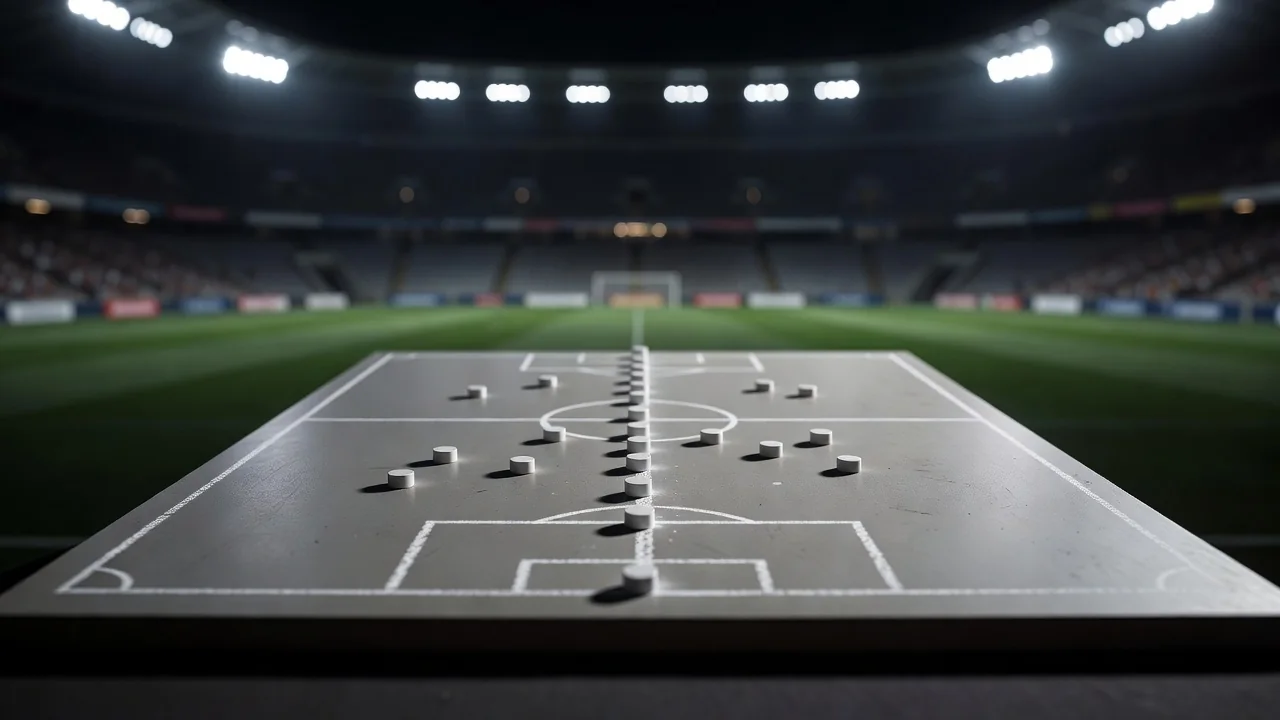
Italian football gave the world catenaccio, the libero and a dictionary of tactical terms, but few are as fashionable right now as the mezzala. The word means half-winger, and it names the midfielder who owns the half-space — that lane between the centre and the flank where modern football's most dangerous work is done. Watch any elite side and you will find one: the number eight who is never quite central and never quite wide, arriving in the box at the exact moment the defence has forgotten him.
The mezzala plays as one of the two advanced midfielders in a three-man midfield, stationed to the left or right of the holding player. From there his job is to attack the channel between the opposing full-back and centre-back — the strip of pitch that defensive systems find hardest to assign.
Why the half-space is prime real estate
The half-space offers the best receiving angle on the pitch. A player in the centre is surrounded; a player on the touchline has half his options cut off by the sideline. The mezzala in the half-space can see the whole goal, play in every direction, and approach the box diagonally — the angle from which cutbacks and shots are hardest to defend. Kevin De Bruyne's finest Manchester City seasons were built on owning the right half-space: the whipped cross behind the line, the late run to the edge of the box, the shot across goal.
The lane also breaks defensive assignments. The channel between full-back and centre-back belongs to both and therefore to neither. When the mezzala runs into it, one of them must break the line to engage — and the moment he does, the pass into the space he vacated is on. Well-drilled mezzalas are not just runners; they are crowbars for prising apart the connections of a back four.
The mezzala's working week
- Arriving in the box as the second wave when the winger holds width.
- Overlapping or underlapping around the wide forward.
- Counter-pressing the instant the ball is lost in the final third.
- Dropping beside the pivot to help build through pressure.
- Covering the flank when the full-back has gone forward.
Underlap and overlap: the two signatures
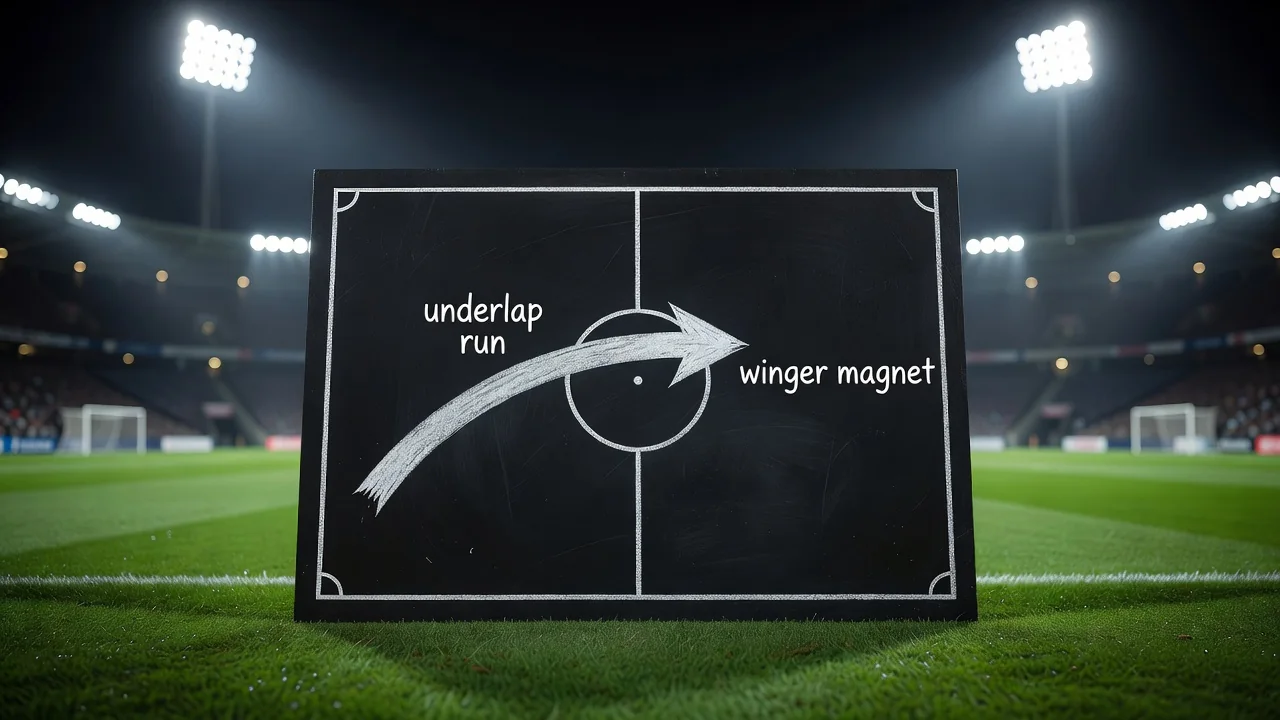
The mezzala's relationship with his winger defines his movement. When the winger holds the touchline, the mezzala underlaps — darting inside him into the half-space to receive between the lines or attack the cutback zone. When the winger inverts and dribbles toward the centre, the mezzala overlaps — racing outside him to stretch the defence back the other way. The constant alternation of the two runs is what makes the pairing so hard to track: the defending full-back is being asked to follow a rotation, not a player.
Italy's own midfielders refined the art for club and country, and the Premier League imported it wholesale. Ilkay Gundogan's late arrivals for City, with the timing of a striker rather than a midfielder, showed the role at its most valuable: the mezzala as the man who appears unmarked in the six-yard box because every defender was watching someone more famous.
What the role costs
The mezzala is a physically expensive position. He is expected in the opponent's box for the cutback and back beside his own penalty area when the counter comes — a commute of a hundred metres repeated all match. Teams that play with two mezzalas and attacking full-backs are betting their midfield can win that race; when the legs go, the space the mezzala left behind becomes the opponent's favourite channel.
The role also depends on structure around it. A mezzala without a holding midfielder covering behind him is just an attacking midfielder with extra steps; without a winger whose movements trigger his runs, he is a passenger between the lines. It is a system position, and it looks ordinary in a broken system.
| Movement | Trigger | What it creates |
|---|---|---|
| Underlap | Winger holding the touchline | Receives between the lines, attacks the cutback zone |
| Overlap | Winger cutting inside | Stretches the defence, opens the crossing lane |
| Half-space reception | Build-up drawing pressure centrally | Turned possession facing goal diagonally |
| Late box arrival | Cross from the opposite flank | Unmarked second-ball and cutback finishes |
Recruitment has caught up with the geometry. Clubs screening for eights now filter for repeated sprint ability and box arrivals alongside the passing numbers, because the role's output is measured as much in runs without the ball as touches with it. The mezzala who looks quiet for an hour and then scores the winner has usually spent that hour doing the running that made the winner possible.
Football's tactical vocabulary changes every few years, but the mezzala has outlasted most fashions because the half-space is not a trend — it is geometry. As long as defences are built around full-backs and centre-backs, the lane between them will belong to the midfielder clever enough to live there.
Keep reading
The Inverted Winger: Cutting Inside to Create Chaos
A right-footer on the left wing changed football. Why inverted wingers bend defences out of shape and what full-backs do with the space.
2026-08-16
The False Nine: Football's Most Misunderstood Role
A striker who refuses to be a striker. From Messi's Barcelona to Firmino's Liverpool, the false nine broke the rules of centre-forward play.
2026-08-15
The Ball-Playing Centre-Back: Building Attacks from Deep
The modern centre-back is the first playmaker. How defenders learned to break lines with passes and why it changed recruitment forever.
2026-08-14