
The False Nine: Football's Most Misunderstood Role
The strangest idea in modern attacking football is a striker who does not want to be near the goal. The false nine wears the centre-forward's shirt, starts in the centre-forward's position, and then spends the match dropping into midfield — dragging the defence's map out of shape and leaving the actual goalscoring to everyone else. It sounds like a striker refusing to do his job. At its best, it is the most destabilising role in the sport.
The concept is older than its modern fame — Hungarian football produced deep-lying centre-forwards generations ago — but the role became a global tactical event when Pep Guardiola stationed Lionel Messi there for Barcelona. A false nine is not a midfielder playing up front; he is a forward who attacks the space between the lines instead of the space behind them.
The dilemma the role creates
Everything the false nine does is aimed at one defender: the centre-back. A conventional striker gives the centre-back a reference point — he knows where his man is, and the defensive line organises around him. The false nine removes the reference. When he drops twenty metres toward his own goal, the centre-back faces the worst choice in football: follow him and abandon the line, leaving a canyon behind, or hold position and let him receive, turn, and face goal with time to think.
Barcelona under Guardiola weaponised this dilemma systematically. Messi dropped, the centre-backs either followed — and the wingers sprinted into the vacated space — or stood off, and the best player in the world turned unmarked at the top of the box. The defence was not being outplayed so much as out-questioned, four or five times a match.
The signature movements of a false nine
- Dropping between the lines to receive turned and facing goal.
- Dragging a centre-back out before slipping a runner in behind.
- Arriving late in the box as a second wave, not a target man.
- Rotating with the wingers so the centre stays permanently occupied.
- Linking the midfield with one-touch layoffs under pressure.
Firmino and the selfless version
If Messi was the false nine as a genius solution, Roberto Firmino at Liverpool was the role as a system component. Klopp's front three worked because Firmino did the work strikers are not supposed to do: he led the press from the front, dropped to create overloads in midfield, and cleared the centre so Mohamed Salah and Sadio Mane could attack the box as the real forwards. His goal numbers looked modest for a title-winning striker because goals were not the job description.
The Firmino version proved the role was a structure, not just a star vehicle. Any team with dangerous wide forwards and midfield runners can use a false nine to turn the striker position into a crowbar for opening defences — provided the man in the middle accepts that his best games may end with someone else's name in the headlines.
When the false nine backfires
The role's weaknesses appear exactly where its strength lives: in the empty penalty box. Against a deep low block that holds its line and refuses to follow, there is no centre-back to drag anywhere, and the false nine drops into a midfield that is already crowded. The team then keeps the ball beautifully in front of the defence and creates nothing — the famous sterile domination that critics throw at possession sides.
It also demands the right supporting cast. A false nine without wingers who run beyond is a striker who has abandoned his post for no reward. And late in a match chasing a goal, when the situation screams for a body in the box, the false nine's instincts pull him the wrong way — more than one coach has ended such games by substituting the experiment for an old-fashioned number nine.
| Version | Reference player | How the goals come |
|---|---|---|
| False nine as scorer | Messi at Barcelona | He drops, turns, and scores or slides the runners in |
| False nine as connector | Firmino at Liverpool | Wingers become the main scorers through the space he clears |
| False nine by rotation | Fluid front threes | Constant swaps leave the defence without assignments |
| Traditional nine | Penalty-box strikers | Service into the box, goals from the six-yard zone |
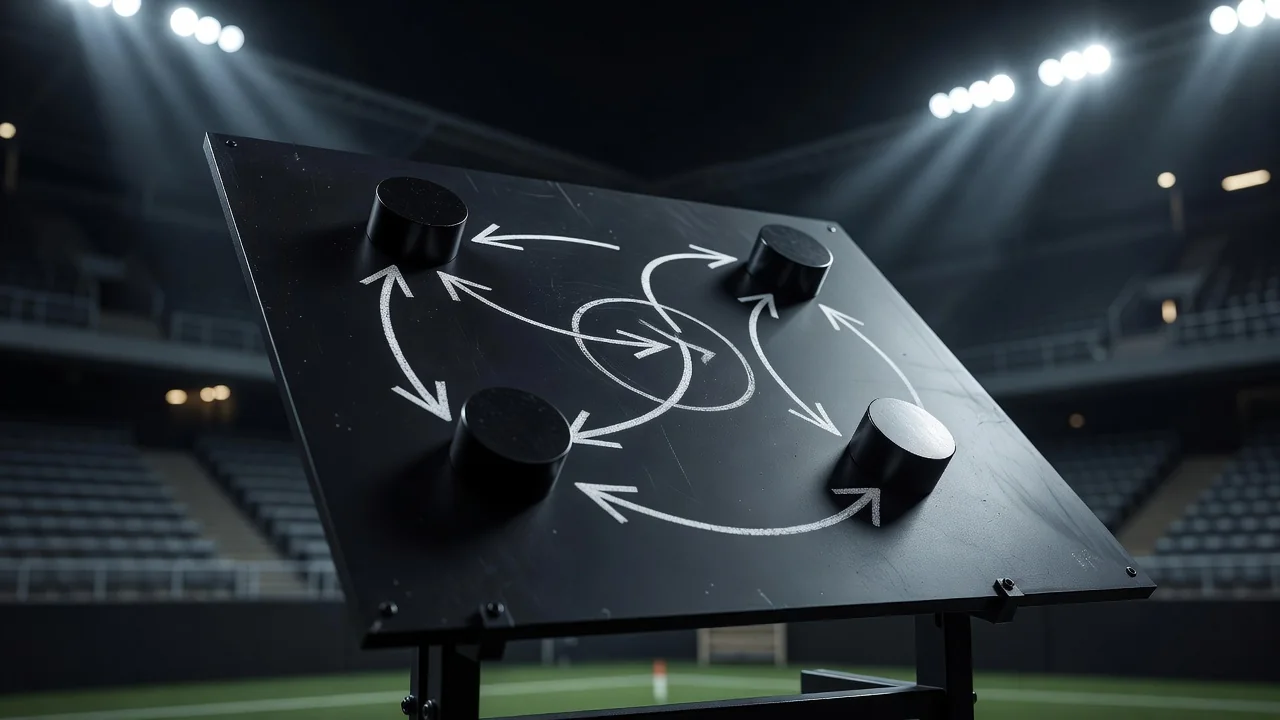
Coaches keep the idea in reserve even when they start with a conventional striker. Moving the nine deep for fifteen minutes is a standard mid-match adjustment against a defensive line that is coping too comfortably — a way to change the questions without changing the personnel. The false nine, in other words, has become a mode of play rather than a specialist's eccentricity.
The false nine remains football's most misunderstood role because its success is invisible in the box score. Judge it by the space the wingers found, the centre-backs dragged into no-man's-land, the midfielder left unmarked at the top of the box — and the striker's empty heat map in the six-yard area starts to look like a design rather than a disappearance.
Keep reading
The Inverted Winger: Cutting Inside to Create Chaos
A right-footer on the left wing changed football. Why inverted wingers bend defences out of shape and what full-backs do with the space.
2026-08-16
The Ball-Playing Centre-Back: Building Attacks from Deep
The modern centre-back is the first playmaker. How defenders learned to break lines with passes and why it changed recruitment forever.
2026-08-14
The Mezzala: The Half-Space Runner Explained
Half winger, half number eight. Italian football's mezzala owns the channel between full-back and centre-back — the most valuable real estate in the game.
2026-08-13