
The Ball-Playing Centre-Back: Building Attacks from Deep
There was a time when a centre-back's passing instructions fit in one sentence: if in doubt, kick it out. The modern game has turned that instruction into a sackable offence. Today's top centre-backs are expected to receive under pressure, break lines with passes through midfield, and step forward with the ball like quarterbacks — while still winning every header in their own box. The ball-playing centre-back is not a luxury anymore; he is the first playmaker of every serious team.
The shift happened because pressing changed the beginning of every attack. Once opponents started hunting the ball in the defensive third, the centre-back became the most pressed player on the pitch — and a defender who cannot play became a weakness the whole pressing system was designed to find.
The build-up starts at the back
Watch any elite possession team in its own half and the structure is obvious: the centre-backs split wide, the goalkeeper becomes a third passing option, and the first phase of the attack is built from the defensive line itself. The centre-back's job in this phase is not merely to keep the ball but to advance it — to wait for the pressing forward to commit, then play the pass that beats him, into the pivot or between the lines.
The line-breaking pass is the role's signature skill. A centre-back who can thread the ball past the first and second lines of pressure in one action removes four or five opponents from the play at once; no dribble in football is that efficient. Virgil van Dijk's diagonal switches for Liverpool and the composed left-footed distribution of players like Alessandro Bastoni turned this from a bonus into an expectation — and transfer fees followed.
The toolkit of the modern centre-back
- Receiving on the half-turn with a pressing forward at his back.
- Playing through the lines with either foot.
- Carrying the ball into midfield when the pass is closed.
- Switching play diagonally to the weak-side winger.
- Choosing correctly between the brave pass and the safe reset.
Stepping out: the defender as midfielder
The most aggressive version of the role goes further: the centre-back carries the ball across the halfway line and becomes an extra midfielder. When a defender steps out with the ball, he creates a numerical overload the opponent has not planned for — someone must leave their assignment to engage him, and that abandoned assignment is where the next pass goes. Guardiola's teams have institutionalised the movement, with defenders like John Stones spending entire possessions operating in the centre circle.
The gamble is visible every time it fails. A centre-back caught in midfield has left the last line short, and the turnover that follows sends the opponent running at a stretched defence. Coaches accept the risk because the alternative — a defender who only plays safe — lets the pressing team settle into a comfortable trap. In the modern game, the dangerous centre-back is the safe choice.
Recruitment and the new prototype
The transfer market has repriced the position completely. Scouts now grade centre-backs on pass completion under pressure, progressive passing distance and composure metrics before they study defending — not because defending stopped mattering, but because at the top level every candidate can defend and only some can play. Academies responded a generation ago: young centre-backs now train with the midfielders in passing drills, and the old clearance-first habit is coached out of teenagers.
The pure stopper has not vanished — deep-block teams still prize defenders who dominate their box above all — but his market has narrowed. The game at the top belongs to the defender who starts attacks, and every season the definition of a complete centre-back slides a little further up the pitch.
| Skill | Why it matters now | When it backfires |
|---|---|---|
| Line-breaking pass | Removes whole lines of pressure in one action | Interception launches a counter at a short defence |
| Carrying into midfield | Creates an unplanned overload | Being caught leaves the last line exposed |
| Diagonal switch | Attacks the weak side before the block slides | A loose ball gifts the winger a footrace |
| Receiving under pressure | Beats the press at its source | One heavy touch, thirty metres from goal |
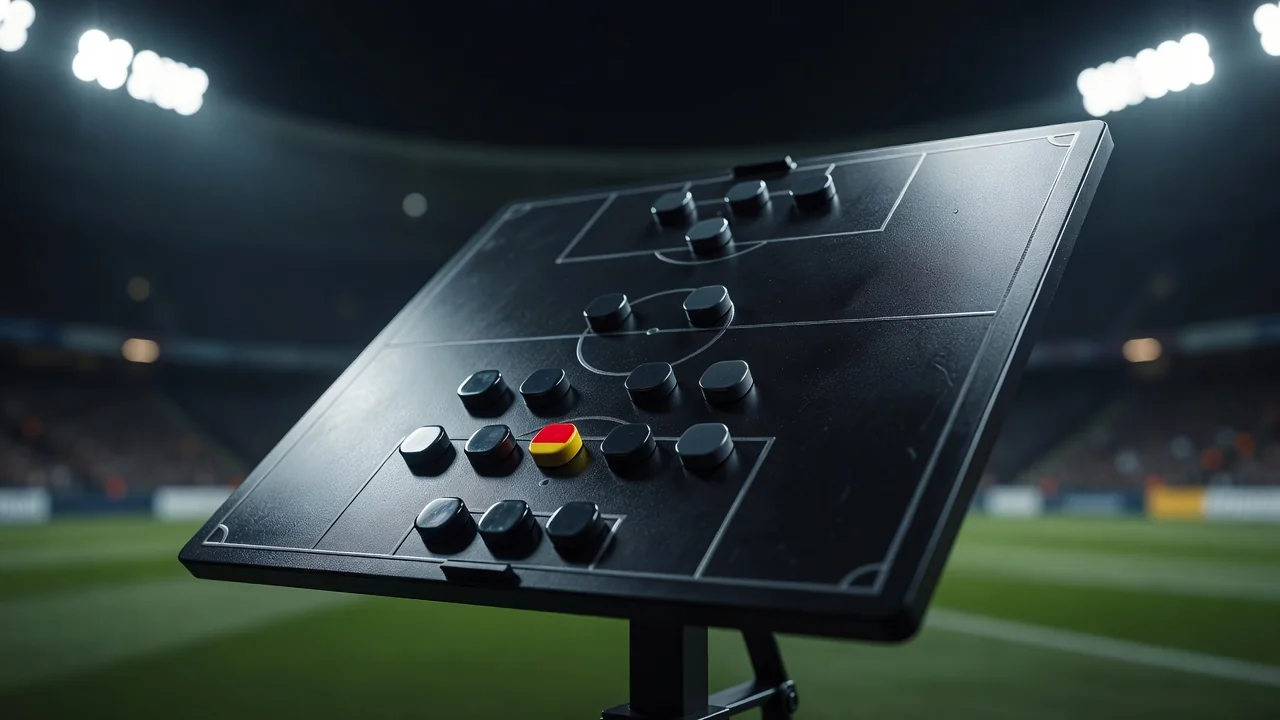
The ripple effects reach every position. Because centre-backs now carry the first creative burden, pivots are freed to play higher, full-backs can attack earlier, and the whole team compresses the pitch by ten or fifteen metres. One skill, added to one position, reshaped the map of the entire side — a reminder that tactics often turn on the capabilities of single roles rather than grand systems.
The next time a centre-back is criticised for a risky pass intercepted on the halfway line, check what his team gained the other nine times he played it. The position has been redefined from football's last resort to its first creative station — and there is no going back to the days of kick it out.
Keep reading
The Inverted Winger: Cutting Inside to Create Chaos
A right-footer on the left wing changed football. Why inverted wingers bend defences out of shape and what full-backs do with the space.
2026-08-16
The False Nine: Football's Most Misunderstood Role
A striker who refuses to be a striker. From Messi's Barcelona to Firmino's Liverpool, the false nine broke the rules of centre-forward play.
2026-08-15
The Mezzala: The Half-Space Runner Explained
Half winger, half number eight. Italian football's mezzala owns the channel between full-back and centre-back — the most valuable real estate in the game.
2026-08-13