
The Inverted Winger: Cutting Inside to Create Chaos
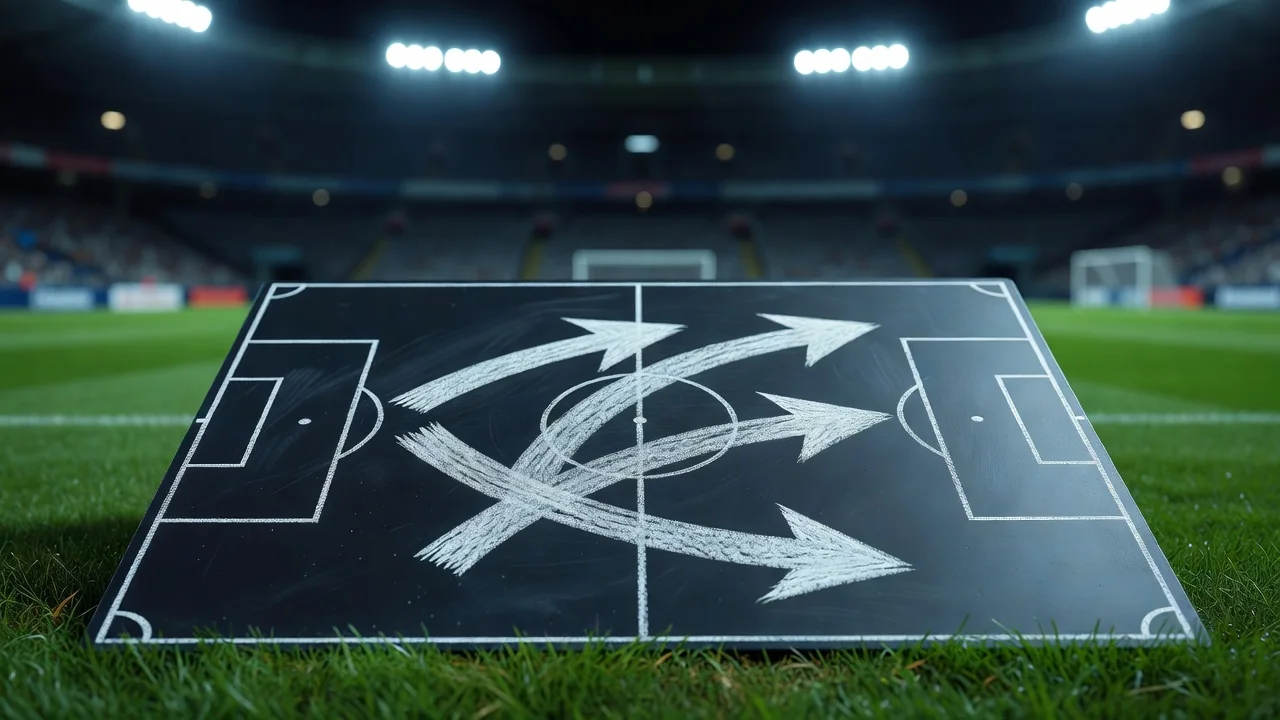
For most of football history, a left-footed player played on the left wing, crossed with his stronger foot, and that was that. Then coaches noticed something: put that same left-footer on the right wing, and instead of crossing from the touchline he could cut inside onto his stronger foot and shoot. The inverted winger was born, and within a generation it went from a curiosity to the default way elite wide forwards play.
An inverted winger is a wide attacker who plays on the flank opposite to his dominant foot — right-footers on the left, left-footers on the right — so that his natural movement carries him toward the centre of the pitch and the goal, rather than the byline. Arjen Robben cutting in from the right and curling into the far corner became the role's signature image: everyone in the stadium knew what was coming, and almost nobody could stop it.
Why cutting inside bends defences
The inversion changes the geometry of defending. A traditional winger attacking the byline can be shown the line and marshalled by one full-back. An inverted winger dribbling toward the centre forces a chain of impossible decisions. Does the full-back follow him inside and abandon the flank? Does a centre-back step out and leave the striker? Does the holding midfielder shuffle across and open the far side? Every answer concedes something, and the winger's job is simply to wait for the hesitation.
The diagonal body shape matters as much as the destination. Coming inside onto his strong foot, the winger faces the goal with the whole pitch visible: he can shoot across the goalkeeper, slip a through-ball with the angle opening up, or switch play to the weak side where the defence has been dragged thin. Robben, Messi in his early wide years, Salah from the right — the goals look different, but the mechanical advantage underneath is the same.
What the role demands
- A strong far foot for shooting after the cut inside.
- Close control at speed in crowded central areas.
- The patience to hold width before choosing the moment.
- Defensive work rate to cover the full-back behind him.
- A striker's instinct once he arrives in the box.
The full-back in the mirror
The inverted winger never works alone. When he comes inside, the flank he abandons becomes someone else's opportunity — usually an overlapping full-back who arrives in the space the winger vacated. This partnership is the real system: the winger drags the defence narrow, the full-back stretches it wide again, and the opponent's back four is pulled apart in two directions at once. Bayern's best years paired Robben's inside runs with relentless overlaps behind him; Liverpool's attack works the same way with Salah coming in and the full-back flying past.
Defences eventually adapted, and the adaptation produced the modern touchline-hugging winger as a counter-measure: if the wide man never comes inside, the overlap never opens. Tactical fashion turned full circle, and both types now coexist — the choice between a traditional winger and an inverted one has become a statement about where a team wants its danger to come from.
Where the inversion fails
The role has honest failure modes. An inverted winger without a finishing end product becomes a player who dribbles into traffic and shoots from bad angles — the cut inside that once surprised defences is now the most scouted move in football. Teams that overuse it become narrow and predictable, running attacks into the densest part of the pitch while the touchline stands empty. And against a disciplined low block that simply refuses to follow him inside, the winger can spend an evening queuing behind eight defenders.
| Choice | What it gives the attack | What it costs |
|---|---|---|
| Inverted winger | Shooting lanes, central overloads, far-post curlers | Narrowness if the full-back does not overlap |
| Traditional winger | Byline crosses, natural width, cutbacks | Fewer goals from the winger himself |
| Inverted plus overlap | Inside threat and outside width together | Demands an elite two-way full-back |
| Two inverted wingers | Both flanks attacking the box | Crosses vanish; the striker starves of service |

It is telling that academies now coach both versions deliberately. Young wingers are trained on the flank of their strong foot first, learning the byline game, and only later moved inside — because the inverted role without the foundation of beating a man on the outside is a one-trick act that good full-backs eventually solve. The complete modern winger chooses the move after reading the defender, not before.
The inverted winger changed what a wide forward is for. The touchline hugger of the old game supplied others; the modern inverted forward is the scorer, and the system around him — overlapping full-backs, strikers who drag defenders away — exists to clear his path to that corner of the box. Everyone knows the move. The best ones still make it unstoppable.
Keep reading
The False Nine: Football's Most Misunderstood Role
A striker who refuses to be a striker. From Messi's Barcelona to Firmino's Liverpool, the false nine broke the rules of centre-forward play.
2026-08-15
The Ball-Playing Centre-Back: Building Attacks from Deep
The modern centre-back is the first playmaker. How defenders learned to break lines with passes and why it changed recruitment forever.
2026-08-14
The Mezzala: The Half-Space Runner Explained
Half winger, half number eight. Italian football's mezzala owns the channel between full-back and centre-back — the most valuable real estate in the game.
2026-08-13