
4-3-3 Formation Explained: Strengths, Weaknesses, Variants
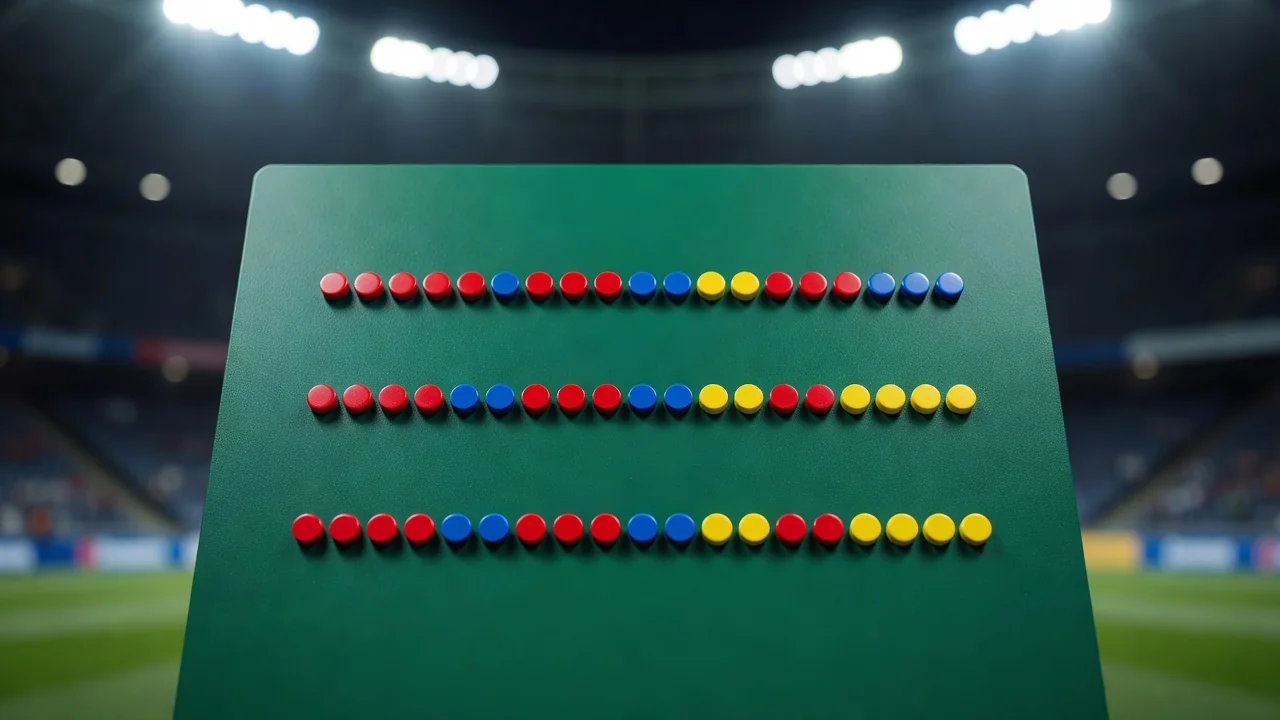
If you had to pick one shape to represent modern football, the 4-3-3 would win the vote comfortably. Barcelona's great sides made it a philosophy, Guardiola exported it to Manchester, and from elite academies to grassroots it has become the default answer to the question of how eleven players should arrange themselves. Yet its apparent simplicity — four defenders, three midfielders, three forwards — hides a system that lives or dies on details most spectators never see.
The 4-3-3 is a possession formation at heart. It stretches the pitch wide with two wingers, controls the centre with a midfield triangle, and presses with a front three that can lock a back four inside its own half. Understanding it means understanding why that triangle matters more than any name on the teamsheet.
The midfield triangle: the engine of the shape
Everything in a 4-3-3 flows from how the three midfielders are arranged. The classic version uses a single pivot at the base — the number six — with two more advanced eights ahead of him. The pivot is the team's metronome and its insurance policy at once: he receives from the centre-backs under pressure, dictates the tempo, and holds position when others attack. Barcelona built years of dominance on Sergio Busquets doing this job so well it looked lazy; City's version with Rodri performs the same invisible function.
The two eights are the shape's runners and creators. They occupy the half-spaces between the opponent's midfield and defence, arrive in the box when the wingers hold width, and counter-press the moment the ball is lost. When a 4-3-3 looks flat, the eights are usually standing next to the opposition's midfield line instead of between the lines — a positioning error of a few metres that breaks the whole machine.
What each line owes the system
- The back four defends narrow and supplies the first passes.
- The pivot connects defence to attack and guards the counter.
- The eights play between the lines and press after losses.
- The wingers hold the touchline to stretch the defensive line.
- The striker pins the centre-backs and leads the press.
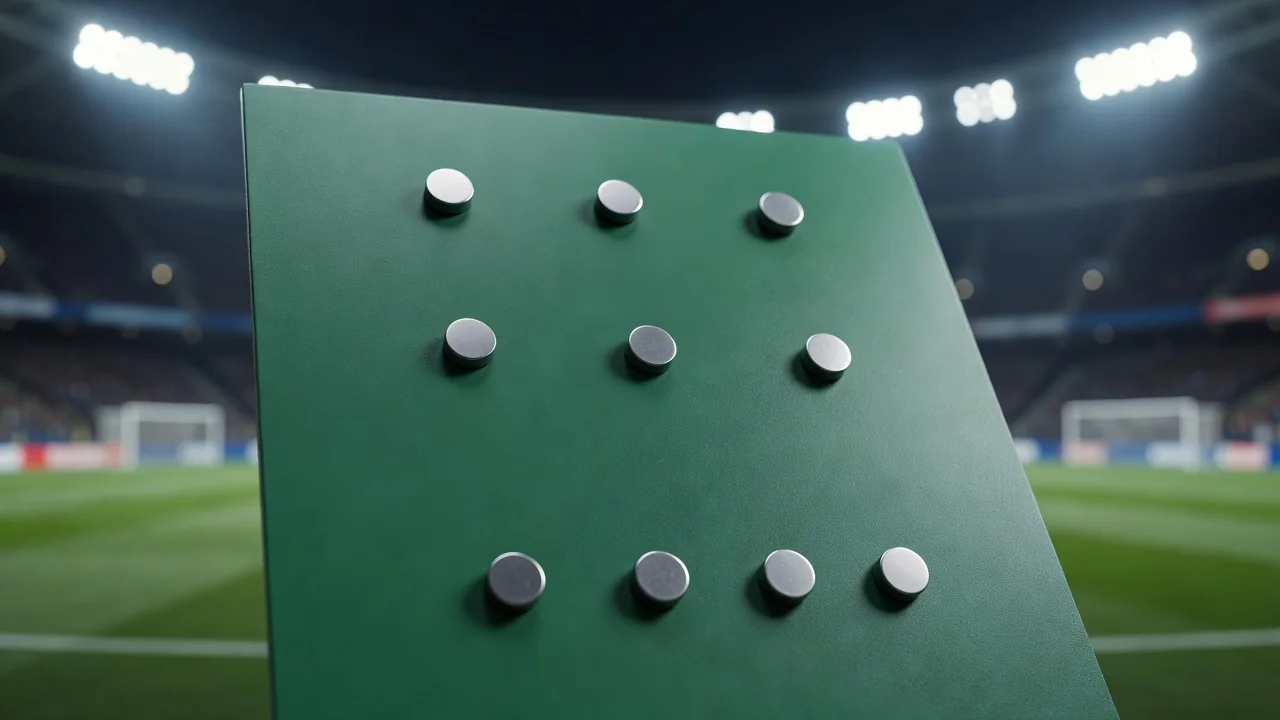
Why the wingers are more structural than glamorous
In a true 4-3-3, the wingers' first job is geometric. By staying wide and high, they pin the opposing full-backs and stretch the back four across the whole width of the pitch, opening the half-spaces for the eights. The spectacular part — the dribbles, the cut-inside goals — is built on that selfless foundation. A winger who drifts inside too early collapses the very spaces his teammates need, which is why coaches in this system are obsessive about width even when it means their best player spends minutes far from the ball.
The striker's role is similarly misunderstood. He is the first defender, setting the pressing traps with curved runs, and a wall for the defenders behind him to bounce passes off. His goal tally matters, but a 4-3-3 can thrive with a modest scoring striker if he pins the centre-backs and brings the eights and wingers into play.
Where the 4-3-3 is vulnerable
The shape's strength is also its exposure. With one pivot screening the defence, a 4-3-3 can be outnumbered in the centre by a 4-2-3-1's double pivot or a 3-5-2's midfield five. The channels between the attacking full-backs and the centre-backs are the classic target: one diagonal ball behind an advanced full-back and the whole structure must scramble across.
It also demands a specific pivot. Put a purely destructive midfielder at the base and the build-up loses its cleanest route forward; put a pure passer there and the counter-attacks flow straight through him. The shortage of players who do both explains why the world's best sixes are among the most expensive footballers alive.
Famous variants of the same idea
The 4-3-3 has always bent around its players. Barcelona's version with Messi morphed into a false-nine structure with the wingers as the real forwards. Klopp's Liverpool ran it as a pressing machine with the full-backs as the main creators and the front three narrow. City's current interpretation pushes a defender into midfield in possession, becoming a de facto 3-2-4-1. The numbers stay the same on the teamsheet; the shape on the pitch is a living thing.
| Variant | Signature feature | Trade-off |
|---|---|---|
| Classic possession 4-3-3 | Wingers wide, eights between the lines | Slow against deep, set defences |
| Pressing 4-3-3 | Narrow front three, full-backs as creators | Physically brutal to sustain |
| False-nine 4-3-3 | Striker drops, wingers become scorers | No focal point against a low block |
| Box-midfield 4-3-3 | A defender steps into midfield in possession | Demands a uniquely versatile defender |
The 4-3-3 endures because it balances the game's central tension: it commits enough players forward to overwhelm a defence while keeping a triangle behind the ball to survive the counter. Master the triangle and the width, and the formation looks like art. Neglect either, and it is just eleven players standing in a familiar pattern.
Keep reading
3-5-2 Formation Explained: Wing-Backs and Midfield Overloads
Italy's old love, Conte's weapon, the shape of two strikers. The 3-5-2 lives and dies on the legs of its wing-backs.
2026-08-20
4-2-3-1 Formation Explained: The Modern Default Shape
Two holders, a creator, a striker — the 4-2-3-1 became football's safest choice. Why so many coaches start here and what it costs.
2026-08-19
5-4-1 Formation Explained: Defending Deep to Strike Once
Five defenders, one striker, zero apologies. The 5-4-1 is the shape of teams that accept being dominated — and plan to punish it.
2026-08-18