
4-2-3-1 Formation Explained: The Modern Default Shape
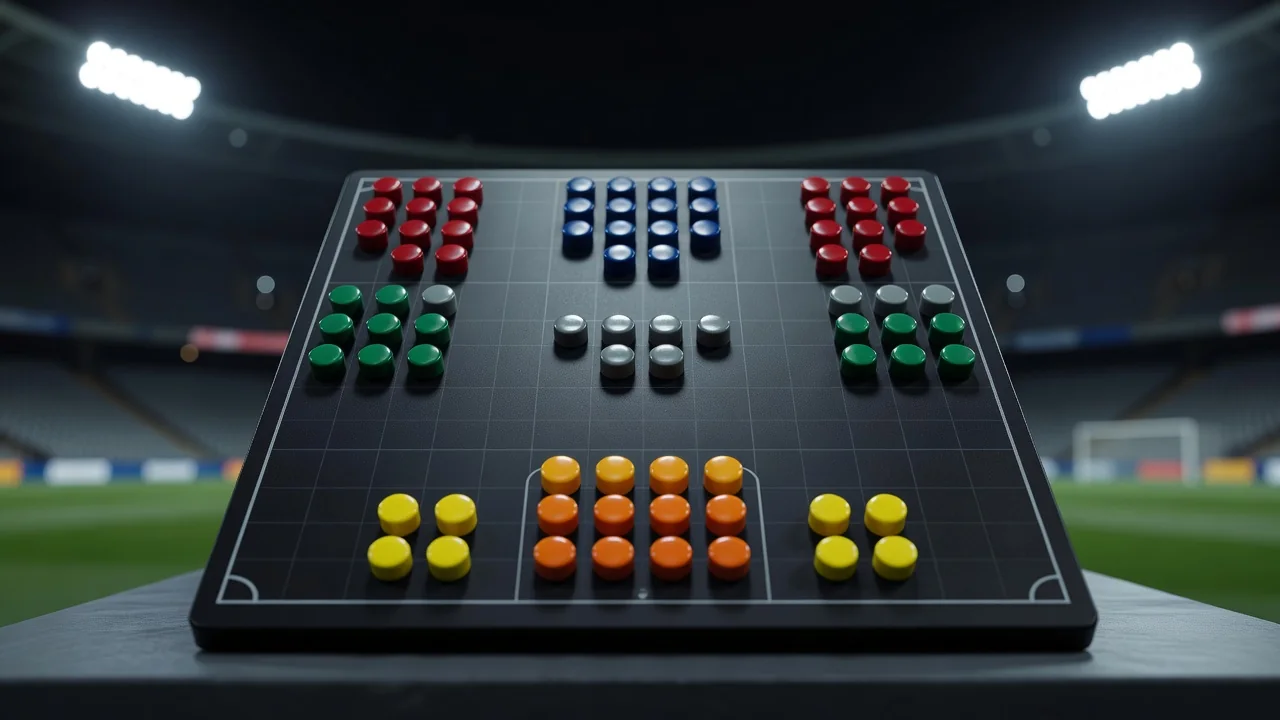
Every era has a formation that coaches reach for when they want safety without surrender. In the 2010s and well beyond, that formation was the 4-2-3-1. Two holding midfielders guarding the defence, three creators floating behind a striker, four defenders with clear jobs — it became the default shape of modern football precisely because it offends no principle and protects against almost everything.
The 4-2-3-1 is best understood as a 4-4-1-1 that grew up. The double pivot — the two in the middle — gives the back four permanent cover, while the number ten plays in the pocket between the opponent's midfield and defence. It is balanced by construction, which is both its genius and its ceiling.
The double pivot: safety first, always
The defining feature of the 4-2-3-1 is the pair of midfielders sitting in front of the defence. Where a 4-3-3 risks everything on one pivot, the 4-2-3-1 splits the job: one holder can step to the ball while the other covers, the defence always keeps a screen of two, and the full-backs can attack knowing someone is minding the space behind them. Real Madrid's great European sides ran the shape with a destroyer beside a passer, and the formula — one to win it, one to use it — has been copied at every level of the game.
The pivot pair also dictates how the team builds. Against a single pressing striker, two midfielders plus two centre-backs create a permanent numerical overload in the first phase, which is why the 4-2-3-1 became the answer to the age of the high press: you simply always have a free man at the back.
What the number ten owes the shape
- Receiving between the lines, turned and facing goal.
- Sliding into the channels when the striker drags defenders away.
- Joining the press as its first trigger, not its spectator.
- Scoring as well as creating — the role is a second striker's too.
- Dropping to form a midfield three when the opponent dominates.
The band of three and the lone striker
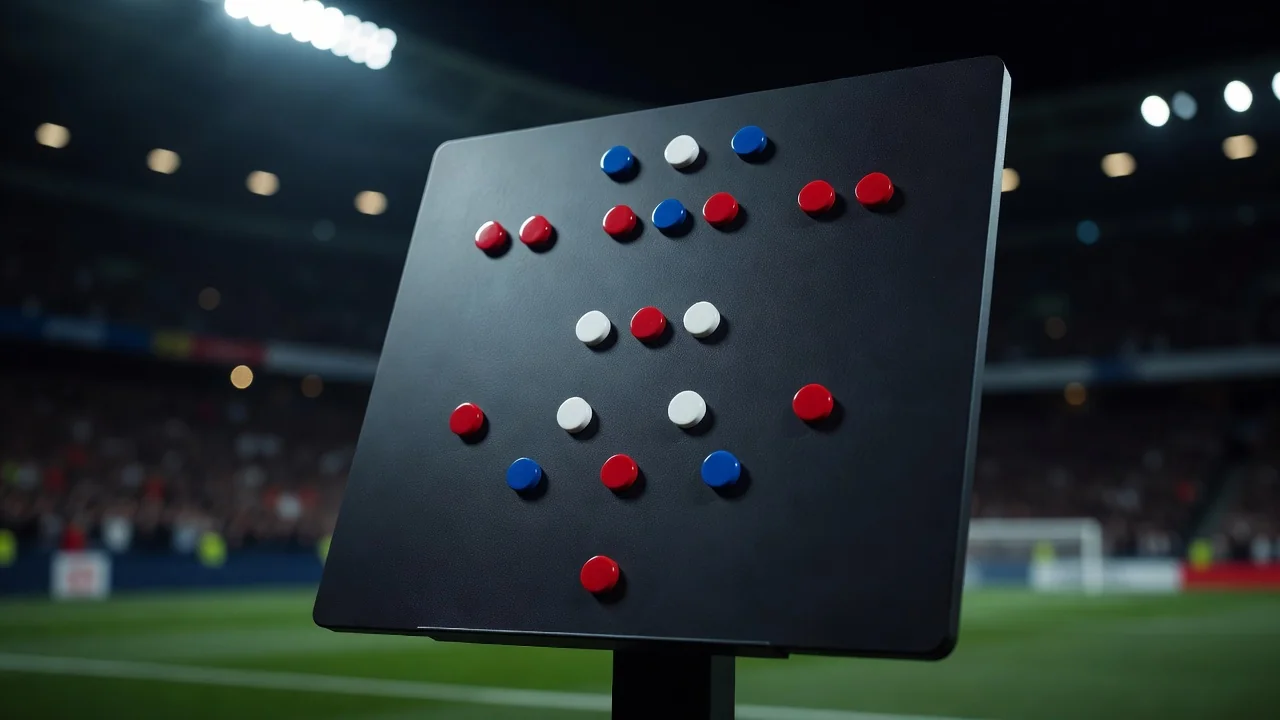
Behind the striker, the three attacking midfielders give the 4-2-3-1 its flexibility. The wide players can be touchline wingers, inverted forwards, or shuttling workers depending on the opponent — the same formation morphs from attacking to cautious without a single substitution. This adaptability is why tournament football loves it: a coach can face a pressing side on Saturday and a low block on Tuesday with the same structure and different instructions.
The lone striker's life in this shape is demanding but clear. He plays with his back to goal more than in any other system, linking the three behind him, and he must stretch the defence in behind often enough to stop the opponent squeezing up. When the striker can do both — hold and run — the formation sings; when he can do neither, the team keeps the ball pleasantly and threatens nobody.
Where the default shape shows its seams
The 4-2-3-1's weaknesses are the mirror image of its balance. The number ten's pocket is also a no-man's-land: if the opponent's holding midfielder follows him and the centre-back steps out, he is marked by two players and the formation's main supply line closes. The full-backs must provide nearly all the width in attack, so a team that pins them back — with aggressive wingers — reduces the 4-2-3-1 to a narrow, predictable unit passing in front of the defence.
There is also a personnel trap. The shape asks its double pivot to defend like destroyers and build like quarterbacks, its ten to create like a classic playmaker and press like a forward. Squads assembled without those hybrid players end up with a formation that is everywhere adequate and nowhere excellent — the complaint that has followed many a mid-table side through a grey season.
Why it refuses to go away
Formations fade when their core problem gets solved by a rival shape. The 4-2-3-1 persists because its core promise — never be outnumbered where it hurts — has not been beaten, only priced. Coaches now flex it in and out of possession: the ten drops to make a 4-3-3, a pivot slides between the centre-backs to make a back three. The numbers on the teamsheet remain the sport's comfort blanket, even as the football underneath grows ever more fluid.
| Player profile needed | Position | Why the shape depends on it |
|---|---|---|
| Destroyer plus passer | Double pivot | One wins the ball, one launches the play |
| Hybrid playmaker-forward | Number ten | The pocket player is the main supply line |
| Two-way athletes | Full-backs | They provide nearly all the attacking width |
| Back-to-goal striker | Centre-forward | He links the band of three and pins the defence |
Call it unglamorous if you like. The 4-2-3-1 has carried teams to league titles and Champions League finals because it asks the fewest structural favours of a squad and forgives the most mistakes. In a sport of fashionable ideas, default is a compliment.
Keep reading
4-3-3 Formation Explained: Strengths, Weaknesses, Variants
The shape of Barcelona's great sides and most of modern football. Why the 4-3-3 dominates, and the midfield balance it secretly depends on.
2026-08-21
3-5-2 Formation Explained: Wing-Backs and Midfield Overloads
Italy's old love, Conte's weapon, the shape of two strikers. The 3-5-2 lives and dies on the legs of its wing-backs.
2026-08-20
5-4-1 Formation Explained: Defending Deep to Strike Once
Five defenders, one striker, zero apologies. The 5-4-1 is the shape of teams that accept being dominated — and plan to punish it.
2026-08-18