
3-5-2 Formation Explained: Wing-Backs and Midfield Overloads
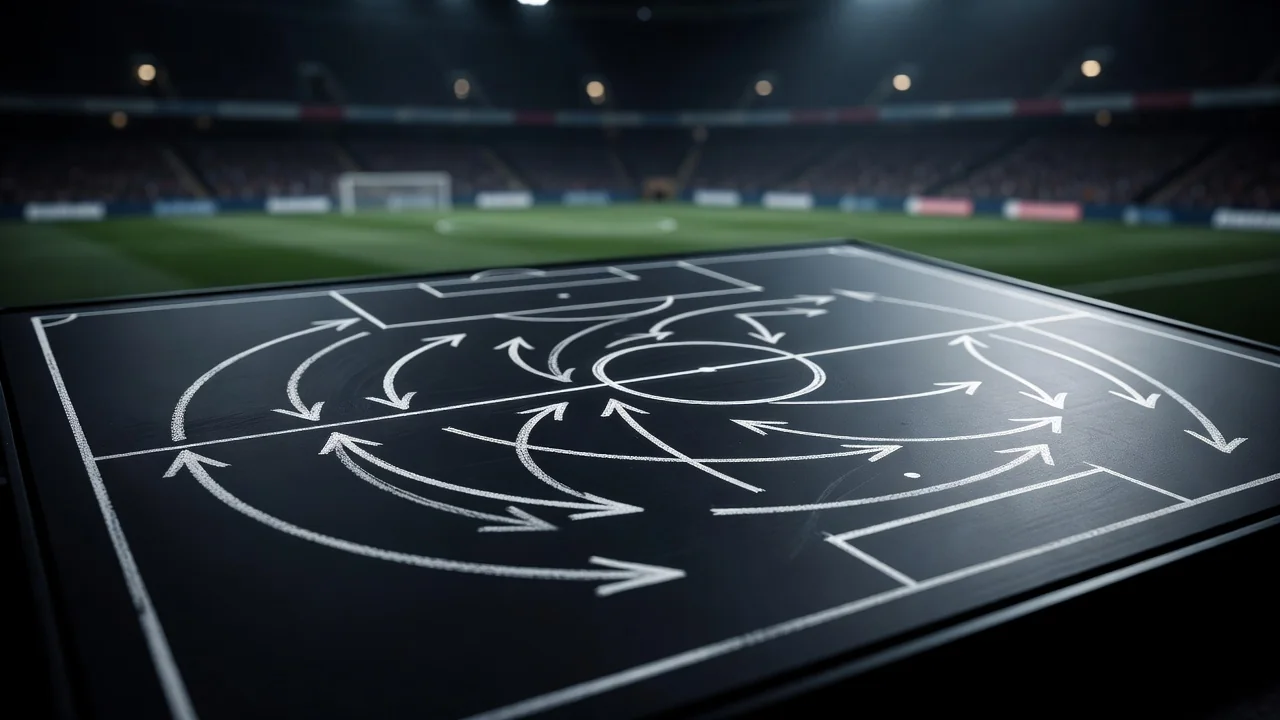
Some formations are fashion; the 3-5-2 is a recurring argument. Italian football has loved it for decades, Antonio Conte won league titles with it in two countries, and every few seasons a new generation rediscovers its central trick: you can dominate the middle of the pitch, keep two strikers up front, and still defend with five. The price of all that security is paid by two players running themselves into the ground on the flanks.
The 3-5-2 lines up with three centre-backs, a midfield band of five, and two strikers. On paper it looks defensive; in practice, against the right opponent, it is a way to have more attackers and more defenders than a back-four team at the same time. The whole trick lives in the wing-backs.
Wing-backs: the players the system eats
In a 3-5-2, the wing-back is simultaneously the winger, the full-back and the width of the entire team. In possession he must push high and wide to stretch the play; without the ball he must recover into a back five. No other role in football covers that much ground, which is why the position favours a specific athlete: relentless, quick, and comfortable crossing with either foot after a sixty-metre sprint. When Conte's Chelsea won the league in 2016-17, Victor Moses — a converted winger — became the emblem of what the role demands.
The wing-back matchup is also the 3-5-2's classic vulnerability. When two back-three teams meet, the wing-backs often cancel each other out in a sterile duel up and down the touchline. And against a 4-3-3 with aggressive wingers, the wing-back can be pinned so deep that the midfield five shrinks to three, surrendering exactly the control the formation was chosen to create.
What the three centre-backs make possible
- A spare man against most two-striker attacks.
- Centre-backs who can step into midfield with the ball.
- Wide centre-backs covering the channels behind the wing-backs.
- A natural back five without any tactical switch.
- Freedom for the midfield to press, knowing the cover is deep.

The midfield five and the two strikers
The crowded middle is the formation's purpose. A midfield five — usually a holding player, two shuttlers and the wing-backs — can outnumber any four-man midfield, giving the team control of second balls and short combinations in the centre. Italy's great club sides used this superiority to dictate matches without dominating possession: win the midfield scrum, release the strikers early, repeat.
Two strikers sound old-fashioned until you watch what they do to a back four. Both centre-backs are occupied, so neither can step out to squeeze the midfield; the channels between each centre-back and full-back are permanently threatened by a partnership that can split and run in opposite directions. The classic pairing — one striker pinning, one roaming — still dismantles defences that have spent years drilling against a lone forward.
Attacking shape versus defensive shape
Honest analysis of the 3-5-2 requires admitting it is two formations. With the ball and the wing-backs high, it attacks like a 3-3-4 or even a 3-1-5-1, flooding the last line. Without the ball, it is a 5-3-2: compact, narrow, and built to defend the box. Conte's Inter and Chelsea sides were masters of that instant transformation, and the teams that fail with the shape are usually the ones whose wing-backs cannot manage the commute between the two versions.
Who should and should not use it
The 3-5-2 suits squads rich in centre-backs and central midfielders but poor in natural wingers — one reason it keeps returning in leagues where wide talent is scarce. It suits a coach who wants control without the philosophical commitment of positional play. It does not suit a team whose best attackers are wide players, nor one without two elite endurance athletes for the flanks. Choose it without those players and the formation does not fail gradually; it fails on the hour mark, every week, in the same two positions.
| Strength | Why it works | Counter-weakness |
|---|---|---|
| Midfield overload | Five players outnumber most midfields | Wing-backs pinned deep erase it |
| Two-striker threat | Both centre-backs are always occupied | Partnerships need time to develop |
| Instant back five | No tactical switch needed to defend deep | Can invite endless pressure |
| Spare defender | Free centre-back sweeps behind the line | Wasted against a lone-striker opponent |

It is worth remembering how often the shape appears at the sharp end of tournaments. International football, where coaching time is scarce and squads are uneven, keeps returning to the back three because it forgives individual mismatches: a weak full-back becomes a wing-back with cover behind him, and an ageing midfielder gains a screen in front. The formation is a leveller, and levellers never really leave the game.
The 3-5-2 will never be the most elegant answer in football, but it remains one of the most practical: maximum bodies where matches are decided, a ready-made defensive shell, and two strikers asking questions defences have forgotten how to answer. Just bring wing-backs who can run all afternoon.
Keep reading

4-3-3 Formation Explained: Strengths, Weaknesses, Variants
The shape of Barcelona's great sides and most of modern football. Why the 4-3-3 dominates, and the midfield balance it secretly depends on.
2026-08-21
4-2-3-1 Formation Explained: The Modern Default Shape
Two holders, a creator, a striker — the 4-2-3-1 became football's safest choice. Why so many coaches start here and what it costs.
2026-08-19
5-4-1 Formation Explained: Defending Deep to Strike Once
Five defenders, one striker, zero apologies. The 5-4-1 is the shape of teams that accept being dominated — and plan to punish it.
2026-08-18