
Watching Football Like a Coach: The 3-Camera Rule and Where to Focus
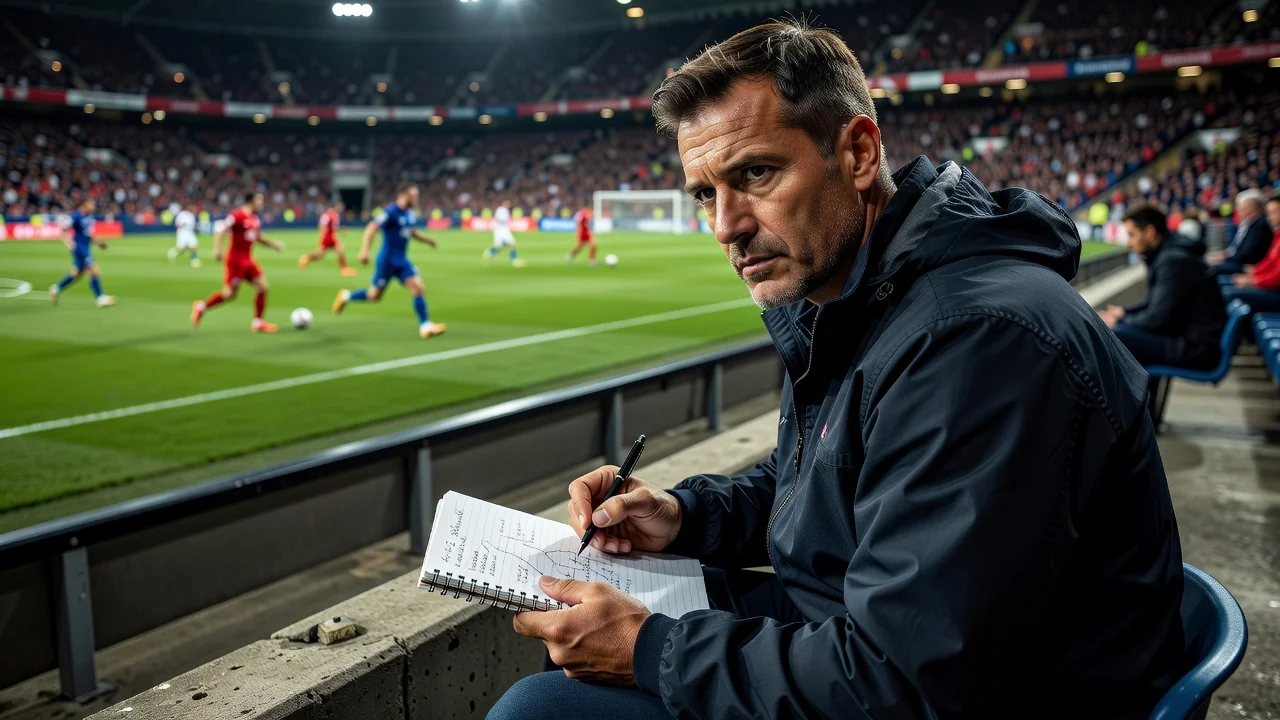
The average fan watches the ball. The average coach watches the space the ball is about to enter. That single shift in perspective is the entire difference between consuming football as entertainment and reading it as a tactical language. When you sit in a stadium or open a stream, your eyes naturally follow the ball because that is where the action is — the pass, the shot, the tackle, the drama. But the ball is the consequence, not the cause. The cause is the movement, positioning and decision-making of twenty-one other players who are not touching the ball at any given moment. Learning to see what they do — to watch the off-the-ball structures that create the on-the-ball outcomes — is a skill that can be developed deliberately, and the three-camera rule is the framework that makes it possible.
The problem with the broadcast view
Television coverage is designed for entertainment, not education. The main camera sits elevated at the halfway line, zoomed in enough to follow the ball carrier but too tight to show the full shape of both teams. When the ball moves to the wing, the camera pans, and the opposite side of the pitch disappears from view. When a shot is taken, the camera follows the ball to the goal, and the defensive line that created or prevented the chance is already off-screen. Replays isolate the attacker and the goalkeeper. Commentary focuses on the individual moment — the quality of the finish, the error by the defender, the brilliance of the pass. The broadcast is a highlights machine, not a tactical instrument.
This means that a fan who has watched thousands of matches on television has seen the ball thousands of times but has rarely watched the structural patterns that determine where the ball goes and why. The fan knows that a goal was scored from a cross to the back post. The coach knows that the goal was created thirty seconds earlier, when the opposing left-back pushed too high and left a channel that the winger exploited, forcing the centre-back to cover wide, which opened the gap at the back post where the striker arrived unmarked. The fan saw the cross. The coach saw the chain of structural causes.
The 3-camera rule: what it is and where it came from
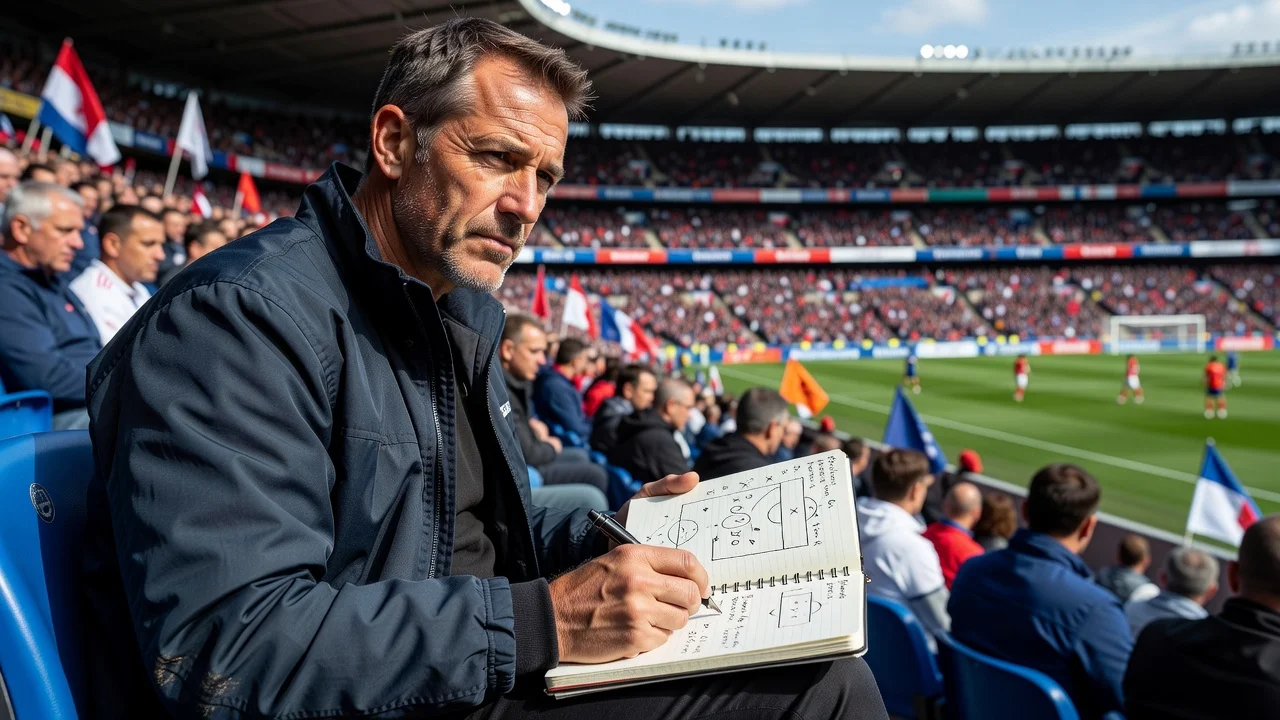
The three-camera rule is a viewing framework borrowed from the practices of professional match analysts and coaching staffs. In a stadium, analysts typically work with multiple camera feeds — a tactical wide angle that shows all twenty-two players, a main broadcast feed that follows the ball, and a close-up feed that captures individual duels. Each camera serves a different analytical purpose, and the analyst switches between them depending on what phase of play is unfolding. The three-camera rule adapts this professional practice for a single viewer using a single screen, by training the eye to cycle between three focal points across the duration of a match.
The three focal points are the ball carrier and immediate duel, the off-the-ball movement of the attacking team, and the defensive structure of the team out of possession. Each focal point reveals a different layer of the match, and the skill lies in knowing when to shift attention and what to look for in each view. The rule is not about literal cameras — it is about training yourself to see the match from three distinct perspectives, cycling between them so that you build a complete picture rather than a ball-following fragment.
Camera one: the ball carrier and the immediate duel
The first focal point is the one everyone already uses: the player on the ball and the one or two opponents nearest to them. This is where individual technique, decision-making and duel quality are visible. But even within this familiar view, a coach sees things that a fan does not.
When the ball carrier receives, the coach is watching the first touch — does it take the ball into space or does it trap the player? The coach is watching the head position before reception — has the player scanned the field in the seconds before the ball arrived, or are they receiving blind? The coach is watching the body orientation — is the player open, able to see both sides of the pitch, or are they forced onto one foot, limiting their passing options? These micro-details determine whether the next action is progressive or stagnant, and they happen in fractions of a second.
The defensive side of the immediate duel is equally revealing. The coach watches the defender's approach — does they close down aggressively, jockey patiently, or commit too early? The distance and angle of the press tell you whether the defender is trying to win the ball, delay the attacker, or shepherd them into a trap. A defender who approaches at a 45-degree angle is channelling the attacker toward a covering teammate. A defender who approaches straight on is trying to win the duel outright. These choices reflect the team's pressing philosophy and the individual's understanding of their role within it.

Camera two: the attacking team's off-the-ball movement
The second focal point is the most important and the most neglected. When the ball is with one player, the other ten players on the attacking team are moving — or should be. What they do without the ball is what creates or denies the options available to the ball carrier. This is the camera that the broadcast almost never shows, and it is the camera that separates a coach's understanding from a fan's.
The key question for this focal point is: what is the attacking team trying to create? Are they making runs in behind the defensive line, stretching the defence vertically? Are they coming short to receive to feet, compressing the defence and creating space behind? Are they creating overloads on one side to draw the defence across before switching play? Are they positioning rest-defence players to protect against a turnover? The movement of players without the ball is the tactical intent made visible. The pass that reaches the striker is the final output. The run that created the space for the pass is the cause.
A practical way to train this focal point is to pick one attacking player who is not involved in the ball and watch them for a full phase of possession. Choose a winger, a midfielder or a full-back, and follow only that player for thirty to forty seconds. You will see runs that are invisible on the broadcast — checking movements, decoy runs, positioning adjustments that respond to the ball's location. You will also see inaction that is deliberate: a player who holds their position to maintain width or to pin a defender, creating space for a teammate by not moving. Stillness is as tactical as movement.
Camera three: the defensive structure out of possession
The third focal point is the team without the ball. While the attacking team moves to create, the defending team organises to prevent. Their structure — the shape they form, the spaces they cover, the triggers that initiate their pressing or dropping — determines whether the attacking patterns succeed or fail. This is the camera that reveals the defensive game plan, and it requires watching the back line, the midfield screen and the pressing forwards simultaneously.
The defensive line is the most informative element. A high line with a small gap to the midfield indicates a team that presses aggressively and tries to compress the pitch. A deep line with a large gap to the forwards indicates a team that defends in a low or mid-block, inviting pressure and looking to counter. The moment the defensive line moves — pushing up to catch an attacker offside, dropping to track a run in behind — tells you how the team is reading the threat and what their collective response is.
The pressing structure is the second element. When the ball moves to a specific player or zone, which defenders react? Does the nearest player press immediately, or do they delay and wait for a trigger? Do the surrounding players compact around the ball, or do they hold their positions and allow the pass? The answers reveal the pressing scheme — whether it is man-oriented, zonal, a hybrid — and whether the team is executing it effectively.
The comparison below summarises what to look for in each of the three focal points and when to shift between them during a match.
| Focal point | What to watch | When to use it | What it reveals |
|---|---|---|---|
| Camera 1: Ball carrier and duel | First touch, body orientation, head scans, defender approach angle and distance | When the ball is with a player under pressure or in a key zone | Individual technique, decision quality, duel mechanics |
| Camera 2: Attacking off-the-ball | Runs, positioning, overloads, width, depth, rest-defence placement | When the attacking team is in sustained possession | Tactical intent, creation of passing options, structural patterns |
| Camera 3: Defensive structure | Line height, pressing triggers, compactness, cover and balance | When the team out of possession is organising or pressing | Defensive scheme, collective discipline, vulnerabilities being exposed |
The three focal points are not used simultaneously — the human eye cannot track twenty-two players at once. They are cycled. When the ball is in a calm phase — a centre-back passing to a full-back under no pressure — shift to camera two or three and watch what the other players are doing. When the ball enters a critical zone — the final third, a transition moment — return to camera one and focus on the decision under pressure. The rhythm of cycling is what develops with practice, and it is what transforms a spectator into an analyst.
Building the cycling habit
Knowing the three focal points is the theory. Practising them is the skill. The transition from ball-following to multi-focal viewing does not happen automatically — it requires deliberate training, and the best way to build it is through structured viewing sessions where you sacrifice the entertainment of following the match in order to learn from it.
The most effective way to begin is to watch a match with a single focal point assigned to each half. In the first half, commit to camera two — the attacking team's off-the-ball movement — and resist the urge to follow the ball. Every time the ball moves, force your eyes to the players who are not receiving it. In the second half, switch to camera three — the defensive structure — and track the back line and pressing shape of the team out of possession. Do this for three or four matches and the habit of cycling will begin to embed itself naturally. You will find your eyes drifting to off-the-ball movement without conscious effort, because your brain has learned that the ball is the endpoint and the movement is the story.
The specific exercises that accelerate this learning process include:
- The one-player watch — choose a single player and watch only that player for an entire half. Not their team, not the ball, not the action — just that individual. You will see how much off-the-ball work a footballer does in ninety minutes, how many sprints, how many positioning adjustments, how many moments of communication with teammates. This exercise builds the habit of seeing beyond the ball and develops an appreciation for the physical and cognitive demands of playing without possession.
- The line watch — choose the defensive line of one team — the back four or back three — and watch only that line for twenty minutes. Track when it moves forward, when it drops, when it shifts laterally, and what triggers each movement. You will begin to see patterns: the line pushes up when the goalkeeper has the ball, drops when the ball is played in behind, shifts toward the side where the overload is forming. This exercise teaches you to read the collective defensive mechanism as a single organism rather than four individuals.
- The transition freeze — at the moment of a turnover — an interception, a tackle, a misplaced pass — pause the broadcast or mentally freeze the frame. Look at where every player is standing at the exact moment of the transition. Who is ahead of the ball and out of position? Who is goal-side and ready to defend? Who has space to exploit? Transitions are where matches are won and lost, and freezing the moment trains you to see the structural chaos that determines what happens next.
- The zone watch — instead of following a player, follow a zone. Pick the space between the opposition's midfield and defensive lines — the zone where a number ten would operate — and watch what happens in that space. Who enters it? How long do they stay? Does the defending team fill it with a holding midfielder or leave it open? Zones reveal tactical priorities that player-tracking does not, because they show what a team is choosing to protect or concede.
- The second-arrival watch — focus not on the player who makes the first movement but on the player who arrives second. In many tactical patterns, the first movement is a decoy — a run that pulls a defender away — and the second movement exploits the space created. Training your eye to wait for the second arrival reveals the layer of tactical design that most viewers miss entirely.
- The rest-defence watch — when one team is attacking with the ball in the final third, find the players who are positioned behind the ball to protect against a counter-attack. Count them. Note their spacing and their body orientation. A team that commits too many players forward and leaves two or fewer rest-defence players is vulnerable to transitions. A team that keeps four or five behind the ball is playing with structural insurance. This exercise teaches you to predict counter-attacks before they happen.
These exercises are demanding at first. Following a single player for forty-five minutes when the ball is elsewhere feels unnatural and even boring. But with repetition — and less than you might think — the skill compounds. After a dozen structured viewing sessions, you will find yourself cycling between focal points instinctively, noticing off-the-ball patterns during a live match that you previously would have missed entirely. The match becomes richer, more layered and more predictable, because you are reading the structural causes rather than reacting to the dramatic effects.
What to look for in each phase of play
The three-camera rule gives you the where. Knowing what to look for in each phase of play gives you the what. Football breaks down into four broad phases — attacking organisation, defensive organisation, attacking transition and defensive transition — and each phase has its own set of observable patterns that reveal tactical intent and execution quality.
When a team is in attacking organisation — sustained possession against a set defence — the things to track go beyond the obvious passing patterns.
The key indicators that separate a well-coached attacking team from a chaotic one include:
- Width and depth — are the wingers hugging the touchline, stretching the defensive line, or tucking inside to create central overloads? Are the full-backs overlapping or underlapping? Width and depth tell you whether the team is trying to stretch the defence horizontally, penetrate vertically or compress the field to create combinations in tight spaces.
- Numerical superiority in build-up — is the team creating a 3v2 or 4v3 advantage in the first phase of possession, typically by dropping a centre-back between the full-backs or pushing a defensive midfielder between the centre-backs? Numerical superiority is the foundation of playing out from the back, and its presence or absence tells you whether the team has a structured build-up plan or is improvising.
- Third-man runs — is there a player making a run that receives the ball indirectly, via a teammate who acts as a wall-pass link? Third-man runs are the hallmark of sophisticated attacking play because they create penetration that cannot be tracked by a defence keyed to the ball.
- Rest-defence structure — how many players stay behind the ball during attacking phases, and where are they positioned? A rest-defence of three players in a horizontal line provides one option for recycling possession and two for covering counters. A rest-defence of two players spread wide is fragile centrally. The rest-defence structure predicts whether a team can sustain pressure or will concede transitions.
- Positional rotations — are players swapping positions during possession — a full-back moving into midfield, a winger moving to full-back, a striker dropping into the ten space? Rotations create confusion in the defensive marking assignments and generate space for the players who do not rotate. Their frequency and complexity indicate the level of tactical sophistication.
- Box entries — how does the team get the ball into the penalty area? Through crosses from wide areas, through balls from central midfield, carries from deep, or combinations on the edge of the box? The method of entry reflects the team's attacking philosophy and reveals which patterns they have rehearsed.
When a team is in defensive organisation — out of possession against an attacking team — the indicators shift to the opposite side of the ball. The line height and compactness tell you whether the team is pressing high, defending in a mid-block or sitting deep. The pressing triggers — what action by the opponent initiates the press — reveal the team's defensive scheme. The positioning of the defensive midfielder relative to the centre-backs tells you whether the team is protecting the central channel or pressing the ball-carrier aggressively. The distance between the lines — the gap between the forward line and the midfield line, and between the midfield line and the defensive line — determines whether the team can be played through or whether they are compact enough to deny central penetration.
Transitions — both attacking and defensive — are the most revealing phases because they expose a team's preparation and discipline in a split second. A team that transitions from attack to defence with three or four players immediately counter-pressing the ball-carrier is playing an organised pressing game. A team that transitions by retreating to its own half is accepting a defensive posture. The speed and shape of the transition response tell you more about a team's coaching than ninety minutes of possession patterns, because transitions cannot be scripted — they reveal the habits that training has built.
The difference this makes
Learning to watch football through the three-camera rule does not make you a coach, but it changes the experience of watching in a way that is irreversible. Once you see the off-the-ball run that creates the goal, you cannot unsee it. Once you recognise the pressing trigger that forces the turnover, you notice it in every match. The game stops being a sequence of dramatic moments connected by dead time and becomes a continuous structure of cause and effect, where every pass is a response to a positioning decision and every defensive action is a response to an attacking pattern. Football becomes slower, clearer and more readable — not because the game has changed but because your eyes have learned to see what was always there.